Boundary Evidence That Supports Safer Lot Improvement Planning
A boundary survey answers the question that trips up a lot of homeowners before they build: the true edge of their land. Plenty of people guess from a fence line or an old driveway, then learn later that the real line sits a few feet off. That small gap can turn a simple weekend project into a costly repair. Solid property evidence gives you a firm place to start, so the shed, fence or patio you want ends up where it belongs.
What the Ground Already Shows You
Before any measuring starts, a property tells its own story through what sits on top of it. Fences, worn driveways, tree lines and old iron pins all hint at where past owners thought their limits were. The problem is that these clues drift over time. A neighbor rebuilds a fence a foot inside the line to be safe, then twenty years later everyone treats that fence as the border.
A surveyor reads those same features but checks them against records and field measurements. That is how you learn whether the hedge you always trusted really matches the deed, or whether it wandered off years ago. The physical signs matter, though they only tell half the story until someone measures them.
Where Your Plans Meet the Real Line
Most improvement projects start with a rough idea and a tape measure. You picture the new fence running straight back, or the addition stretching toward the side yard. Once you have measured property lines to compare against, those ideas get a reality check. You can see if the planned fence clears the line with room to spare, or if the addition crowds a corner you never accounted for.
A few projects almost always sit close enough to the line to check first:
- New fences and retaining walls
- Detached garages, sheds and carports
- Pool decks and patios near a side yard
- Driveway widening or a second access point
Each of these is hard to move once it is set, so the small cost of confirming the line early beats the big cost of relocating it later.
Older Lots Carry Years of Quiet Changes
Long-held parcels are where boundaries get murky. Decades of small edits pile up. A previous owner adds a gravel path, a neighbor plants a row of trees, a storm knocks down the original corner marker and nobody replaces it. None of these feel like a big deal on their own, but together they blur the picture.
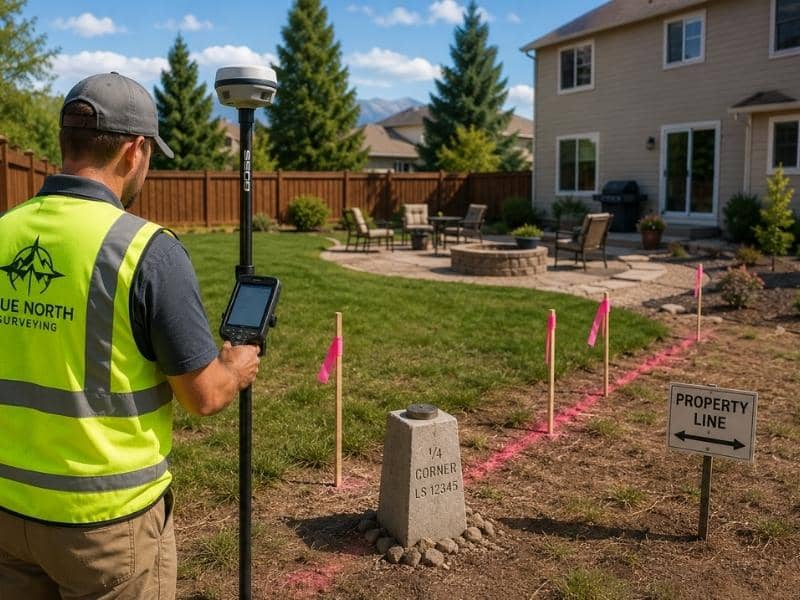
A fresh survey pays off most of these lots. Surveyors track down the original monuments or set new ones based on the recorded description. That resets the reference points, so you work from the real corners instead of whatever has crept in over the years. For a lot that has stayed in one family a long time, this often clears up questions that have lingered for decades.
Clearer Talks With the Crew You Hire
Contractors work faster and quote more accurately when they know the real limits of a site. Hand a fence installer a survey and the guesswork disappears. The crew knows exactly how far the posts can go and where they need to hold back.
That clarity protects you too. If a contractor places something over the line without knowing, you are the one who deals with the angry neighbor and the removal bill. Giving your crew the property data upfront keeps everyone honest about what fits and what does not. It also cuts down on the mid-project surprises that stretch timelines and budgets.
From a Fuzzy Yard to a Record You Can Use
The real value of boundary work is that it turns a vague sense of your property into something written down. Instead of pointing at a general area and saying the line is “around there,” you have measured corners, a drawing and a description you can hand to anyone. That record follows the property.
When you sell, the next owner inherits clear information. When you refinance or add on later, you are not starting from scratch. A yard that once raised more questions than answers becomes a documented piece of land, and that makes every future decision easier to plan.
Frequently Asked Questions
Does a boundary survey cover the whole property or just one corner?
It covers the full perimeter of your parcel. A surveyor locates every corner and the lines that connect them, so you get the complete shape of your land rather than a single spot.
How is boundary evidence different from what my deed says?
Your deed describes the land in words and measurements. Boundary evidence is the physical proof found on the ground, like markers and monuments, that a surveyor matches against that written description to confirm the real edges.
My fence has been there for years. Isn’t that my property line?
Not always. Fences get placed inside, outside or right on the line, and they shift when they are rebuilt. A survey tells you whether your fence sits on the true boundary or somewhere near it.
Will I need a new survey for every project?
Usually not. Once you have a current survey with solid corners, you can plan several projects from it, as long as the property and its markers have not changed since the work was done.
Can boundary information help if my neighbor and I disagree?
Yes. A survey gives both sides a neutral, measured answer instead of two opinions. Many disagreements settle quickly once there is a professional drawing showing where the line runs.